

In recent years, cilia, microscopic, tentacle-like extensions from biological cells, have risen from relative obscurity and are now considered important to the understanding of many human afflictions. In a December BioScience article, George B. Witman, of the University of Massachusetts Medical School, and Jason M. Brown, of Salem State University, describe recent discoveries involving cilia-related diseases (called “ciliopathies”) and highlight “model” species that could be useful for systematic study of ciliopathies.
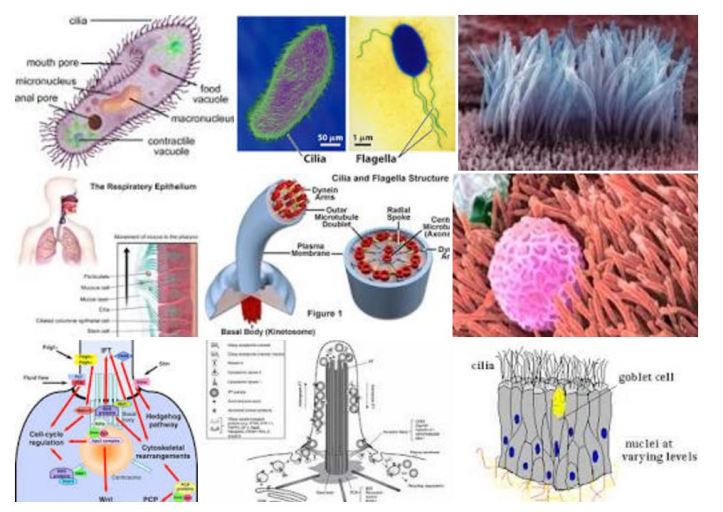
Cilia perform a broad range of functions, including a starring role in cell signalling. Motile ones wiggle and so move fluids within the body, including cerebrospinal fluid in the brain. In humans, cilia are found on almost every cell in the body. Because of this, ciliopathies often make themselves known as syndromes with widely varying effects on a number of tissue types. For instance, the ciliopathy Jeune asphyxiating thoracic dystrophy involves the development of abnormally short ribs, accompanied by…
View original post 151 more words
 Health Concierge. Telemedicine. Personalized Diet Plan