
Protein complexes identified that control infection and reactivation.
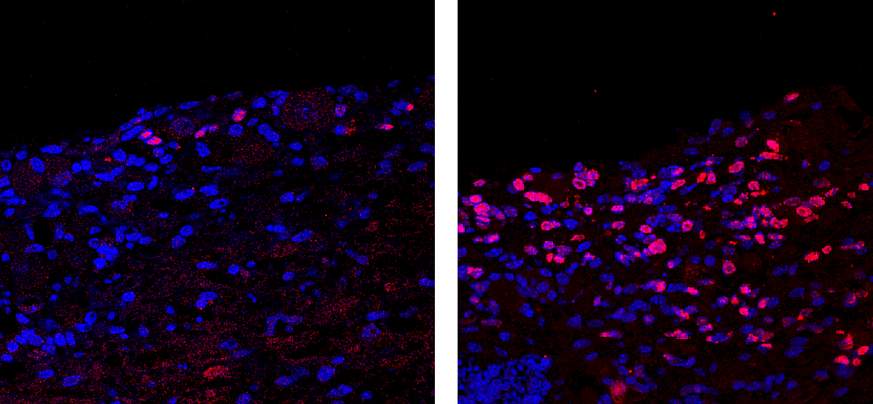 The left image shows typical HSV reactivation (red) from latency in neurons. On the right, viral reactivation is stimulated by compounds that activate the HCF-1 binding partners.
What
Herpes simplex virus (HSV) infections last a lifetime. Once a person has been infected, the virus can remain dormant (latent) for years before periodically reactivating to cause recurrent disease. This poorly understood cycle has frustrated scientists for years. Now, National Institutes of Health scientists have identified a set of protein complexes that are recruited to viral genes and stimulate both initial infection and reactivation from latency.
Environmental stresses known to regulate these proteins also induce reactivation.
Globally, the World Health Organization estimates that 500 million people are infected with HSV-2 while two-thirds of the population are infected with HSV-1. These viruses cause human diseases ranging from oral cold sores to genital lesions to serious…
View original post 466 more words
 Health Concierge. Telemedicine. Personalized Diet Plan